Guide · Updated
Komodo: the complete guide
Komodo National Park is a UNESCO World Heritage Site in eastern Indonesia, between the islands of Sumbawa and Flores. It protects the Komodo dragon, the largest lizard alive, on islands such as Komodo and Rinca, along with reefs known for manta rays. Every visit starts from Labuan Bajo on Flores, and nearly every visit happens by boat.
This guide covers what you need to plan a trip in 2026: where the park is, what the new daily visitor quota means, what the entry fees are, when to go, how to get there, and how a day trip, a shared liveaboard and a private yacht compare.
Quick facts
| Fact | Detail |
|---|---|
| Location | Between Sumbawa and Flores, West Manggarai, East Nusa Tenggara, Indonesia |
| Status | National park since 1980, UNESCO World Heritage Site since 1991 |
| Main islands | Komodo, Rinca and Padar, plus many smaller islands |
| Gateway | Labuan Bajo, Flores, via Komodo Airport (LBJ) |
| Driest months | Roughly May to October, with July to September the driest |
| Entry fee | IDR 250,000 per foreign visitor per day (as of October 2026) |
| Visitor quota | 1,000 visitors per day across the park since 1 April 2026 |
| Booking | Registration through the park's SiOra system, by the day before at the latest |
| Typical trip | Day trip, or 2 to 7 nights on a boat |
What is Komodo National Park?
Komodo National Park is a protected area of islands and sea in the Lesser Sunda chain of eastern Indonesia, created in 1980 to protect the Komodo dragon and inscribed on the UNESCO World Heritage List in 1991, according to CNES. It covers around 1,800 square kilometres of land and water, most of it sea.
The park lies between Sumbawa to the west and Flores to the east. It is administered from Labuan Bajo by the Komodo National Park Authority (Balai Taman Nasional Komodo, often shortened to BTNK), which sits under Indonesia's Ministry of Forestry. Since July 2026 the authority has operated as a public service agency, a status that lets it reinvest visitor revenue in the park, according to Detik Finance.
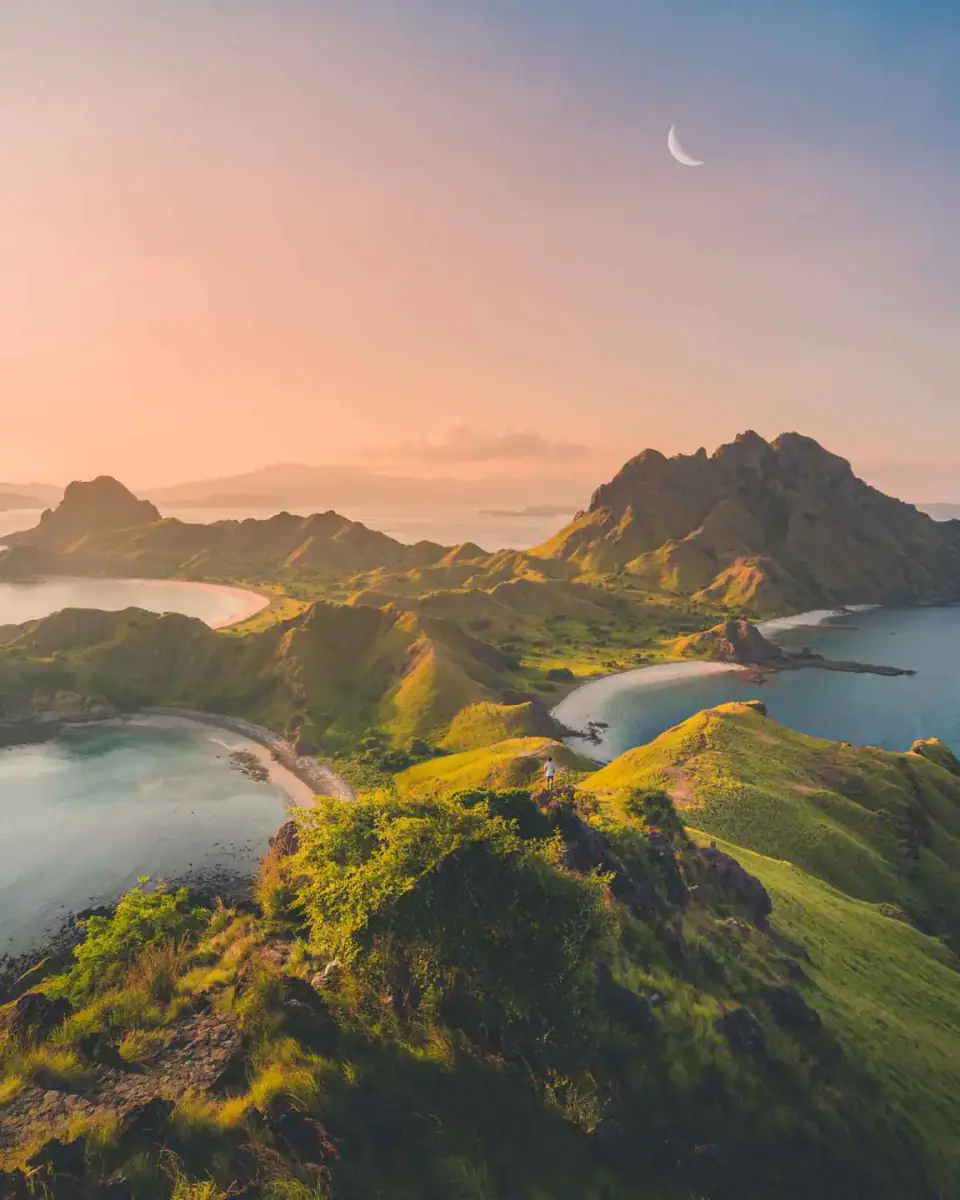
The landscape surprises first-time visitors. The islands are dry and steep, covered in savanna grass that turns gold in the dry season, and they drop straight into water that runs from turquoise over sand to deep blue over the channels. The contrast between bare hills and busy reefs is the reason the park works so well from a boat.
The main islands: Komodo, Rinca and Padar
Three islands do most of the work on any itinerary, and each has a different job.
| Island | Area | What you go for | Dragons? |
|---|---|---|---|
| Komodo | About 390 km² | Ranger walks from Loh Liang, Kampung Komodo village, nearby Pink Beach | Yes, a large population |
| Rinca | About 196 km² | Ranger walks from Loh Buaya, often a shorter stop from Labuan Bajo | Yes, the largest subpopulation |
| Padar | About 20 km² | The ridge viewpoint over three bays, best at sunrise | Not a dragon stop |
Island areas are from CNES. The San Diego Zoo Wildlife Alliance notes that Komodo and Rinca together hold about two-thirds of all wild Komodo dragons, with Rinca holding the largest single subpopulation (San Diego Zoo Wildlife Alliance). Padar's dragons largely disappeared in the 1970s, as the Smithsonian's National Zoo notes, so Padar is visited for its view rather than its wildlife.
Komodo Island is the largest and the only one of the three with a sizeable village. For more on the island itself, read our guide to Komodo Island. For Padar, see our Padar Island guide, and for the dragons themselves, our Komodo dragon guide.
How many Komodo dragons are left?
About 3,270 Komodo dragons live inside the park, give or take 371, according to the most recent figure published by Indonesia's Ministry of Forestry in February 2026, with roughly 700 more on Flores outside the park (KSDAE, Ministry of Forestry). The park authority describes the population as relatively stable over the past two decades.
The species is listed as Endangered on the IUCN Red List. It was moved up from Vulnerable in 2021 because the islands it lives on are small and isolated, and rising sea levels and temperatures are projected to shrink its habitat by at least 30 percent over the next 45 years (NPR). The population inside the park is considered well protected. The greater pressure is on Flores, where habitat is being lost to farming and settlement.
What else lives in the park?
Komodo is as much a marine park as a dragon reserve. The reefs, channels and seagrass beds draw divers and snorkellers from all over the world, and manta rays are the headline. A study published in PeerJ in 2022 identified 1,085 individual reef manta rays from photographs taken at four tourism sites in the park between 2013 and 2018, which the researchers describe as one of the largest known aggregations in the world (Germanov et al., PeerJ).
On land, the park's own visitor rules single out two other species for protection from noise: the large flying foxes that roost in the mangroves, and the yellow-crested cockatoo (Komodo National Park Authority). The flying fox colony is what you watch leave the mangroves at dusk off Kalong Island.
For the underwater side of a trip, see our guides to diving in Komodo, snorkelling in Komodo and Manta Point.
Komodo National Park rules for 2026: the daily visitor quota
Since 1 April 2026 the park has capped visits at 1,000 people a day, equal to about 365,000 a year, covering Padar, Rinca and Komodo islands and 23 dive sites around them, according to Indonesia's Ministry of Forestry. The quota is real and in force, not a proposal.
The reason is pressure. The park recorded 429,509 visitors in 2025, 68 percent of them international, which is above the number the park's own carrying-capacity studies say it can sustain (Antara). Here is what the rules mean for a visitor in practice:
- Register in advance: every visitor and every tour operator must register through the park's SiOra system before entering, no later than the day before the visit, and on-the-spot ticket sales have been dropped (detikBali). Foreign visitors can book through their tour operator rather than the app.
- Padar runs on timed sessions: South Padar was set up with three entry windows, 05:00 to 08:00, 08:00 to 11:00 and 15:00 to 18:00 local time, each with its own limit (detikBali). Trekking outside your timed entry breaks the park's rules.
- The quota is adaptive: the ministry has described the cap as dynamic, to be reviewed as infrastructure on Padar improves (Ministry of Forestry). Expect details to change, and check before you travel.
- Full days happen: in the first week of the quota, late arrivals were turned away from Padar after the day's allocation was used up (detikBali). In peak months, plan your registration early.
On a private charter, our concierge and the boat's operator handle registration for your group as part of planning the route.
Other park rules that shape a boat trip
The park publishes a visitor protocol that applies to guests and operators alike (Komodo National Park Authority). The rules most likely to affect a yacht trip are:
- No touching wildlife or getting too close to it, on land or in the water, and no feeding animals.
- Trekking only on marked trails and inside your timed entry, following the ranger or naturalist guide.
- No jet skis, Sea-Doos, banana boats, flyboards or similar motorised water sports anywhere in the park's waters.
- No beach dinners, barbecues or other cooking on the beaches or on land inside the park.
- No anchoring in water shallower than 30 metres unless the bottom is entirely sand, and no anchoring in manta habitat or along manta routes.
- Diving only with a dive certification, and no taking sand, coral or shells.
Serious breaches can lead to a six-month ban from Indonesia's conservation areas, and foreign visitors can be referred to immigration. If a boat advertises a beach barbecue or jet ski, those happen outside the park boundary, not inside it.
How much does it cost to enter Komodo National Park?
Foreign visitors pay an entrance ticket of IDR 250,000 per person per day, as of October 2026, under Government Regulation 36 of 2024 (Komodo National Park Authority tariff table). Indonesian visitors pay IDR 50,000 on weekdays and IDR 75,000 on Sundays and public holidays.
| Charge | Amount (as of October 2026) | Basis |
|---|---|---|
| Entrance, foreign visitor | IDR 250,000 | Per person, per day |
| Entrance, Indonesian visitor | IDR 50,000 (IDR 75,000 Sundays and holidays) | Per person, per day |
| Scuba diving | IDR 25,000 | Per person, per day |
| Drone flying | IDR 2,000,000 | Per drone, per day, with a permit |
| Boat entry | IDR 100,000 to IDR 200,000 for most speedboats and wooden boats, by engine power | Per boat, per day |
Two cautions. First, tickets are non-refundable once bought. Second, the park became a public service agency in July 2026, and a new tariff regulation for its services was being prepared at the time (Detik Finance), so the amounts may change. Many older articles quote a much higher conservation fee that was proposed in 2022; it does not appear on the park's current official tariff table, so treat those figures as out of date.
As a worked example, two foreign guests spending three days inside the park pay IDR 1,500,000 in entrance tickets between them, plus the diving fee on days they dive. Our Komodo National Park fees guide explains how fees appear on a charter quote.
When is the best time to visit Komodo National Park?
The best time to visit Komodo is the dry season, roughly May to October, when rainfall is lowest and the hills turn gold. July, August and September are the driest months. December to March is the wet season, with heavy rain on most days in January and February.
| Month | Avg high | Rainfall | Rainy days | Sea temp | What to expect |
|---|---|---|---|---|---|
| January | 31°C | 396 mm | 22 | 28°C | Wettest month, greenest hills |
| February | 31°C | 361 mm | 19 | 28°C | Wet, quieter |
| March | 31°C | 310 mm | 17 | 28°C | Wet season tailing off |
| April | 31°C | 155 mm | 11 | 29°C | Shoulder month, hills still green |
| May | 31°C | 119 mm | 7 | 29°C | Dry season begins |
| June | 31°C | 51 mm | 5 | 28°C | Dry, busy season starts |
| July | 31°C | 28 mm | 3 | 28°C | Very dry, peak season |
| August | 31°C | 28 mm | 1 | 27°C | Driest, coolest water |
| September | 32°C | 46 mm | 1 | 27°C | Dry, golden hills |
| October | 32°C | 99 mm | 4 | 28°C | Late dry season |
| November | 32°C | 193 mm | 12 | 29°C | Rains return |
| December | 31°C | 297 mm | 19 | 29°C | Wet season |
Climate averages for Labuan Bajo from Weather2Travel. These are long-term averages, not forecasts, and conditions at sea also depend on wind and swell on the day.
On our board, 60 of the 63 boats that sail Komodo list it from May to October, and most spend the rest of the year in Raja Ampat, which has its own season. A handful list Komodo year-round. For a month-by-month view, see the best time to visit Komodo and Komodo weather by month.
How to get to Komodo National Park
You reach Komodo National Park by flying to Labuan Bajo on the western tip of Flores and boarding a boat there. Komodo Airport (IATA code LBJ) sits just outside the town, and every day trip, liveaboard and charter departs from the town.
- Fly to Labuan Bajo: domestic flights connect Komodo Airport with Bali and Jakarta, and Bali is the most common connection for international travellers. The airport was granted international status in April 2024 (Bisnis Indonesia), and Jetstar began a direct Singapore route in March 2025 (Antara). Schedules change by season, so check current timetables.
- Transfer to the harbour: the drive from the airport to the waterfront is short, and most charters include the transfer.
- Board your boat: day boats and liveaboards leave from the harbour or nearby jetties. A private yacht usually sends its tender to collect you.
- Enter the park: your operator handles SiOra registration and tickets, and the park begins a short run west of town.
There is also a slower route overland and by sea from Lombok or Sumbawa. Our guides to getting to Komodo from Bali, flying or sailing from Bali and Labuan Bajo go into the detail.
Ways to visit: day trip, shared liveaboard or private yacht
There are three main ways to see the park, and the difference is mostly about time, privacy and how much control you have over the timing of each stop.
| Speedboat day trip | Shared open-deck liveaboard | Private phinisi or yacht charter | |
|---|---|---|---|
| Length | One long day | Usually 2 to 4 nights | Usually 3 to 7 nights or more |
| Who you share with | A full boat of other guests | Other travellers, cabin by cabin | Only your own group |
| Sleeping | Back in Labuan Bajo | Shared deck or small cabins | Private cabins, usually en suite |
| Route | Fixed, fast hops between the big sights | Fixed, set by the operator | Planned around your group, tides and the quota |
| Timing at sights | Same hours as most other day boats | Set schedule | Can aim for quieter windows, such as Padar's first session |
| Reach | Central park only | Central park, sometimes further | Can reach the quieter south and beyond |
| Best for | Short stays and tight budgets | Solo travellers and backpackers | Families, couples, friends and divers who want space |
A speedboat day trip packs Padar, a dragon walk, Pink Beach and a snorkel stop into one day, but you travel at the same times as everyone else and spend much of the day in transit. A shared liveaboard spreads the same highlights over a few nights at a lower price per person, with less privacy. A private charter costs more in total but gives you the whole boat, so the captain can time a dawn landing on Padar, wait out a current before a dive, or move to an empty bay for the night.
For deeper comparisons, see Komodo day trip vs private charter and Komodo liveaboard vs private yacht.
Seeing Komodo by private yacht
Komodo is one of the best places in Asia to charter a whole boat, because the park is compact, the anchorages are sheltered in the dry season, and the best moments, such as a sunrise climb or a quiet dragon walk, reward good timing. On a private charter the route is built around your group and the day's tides rather than a fixed timetable.
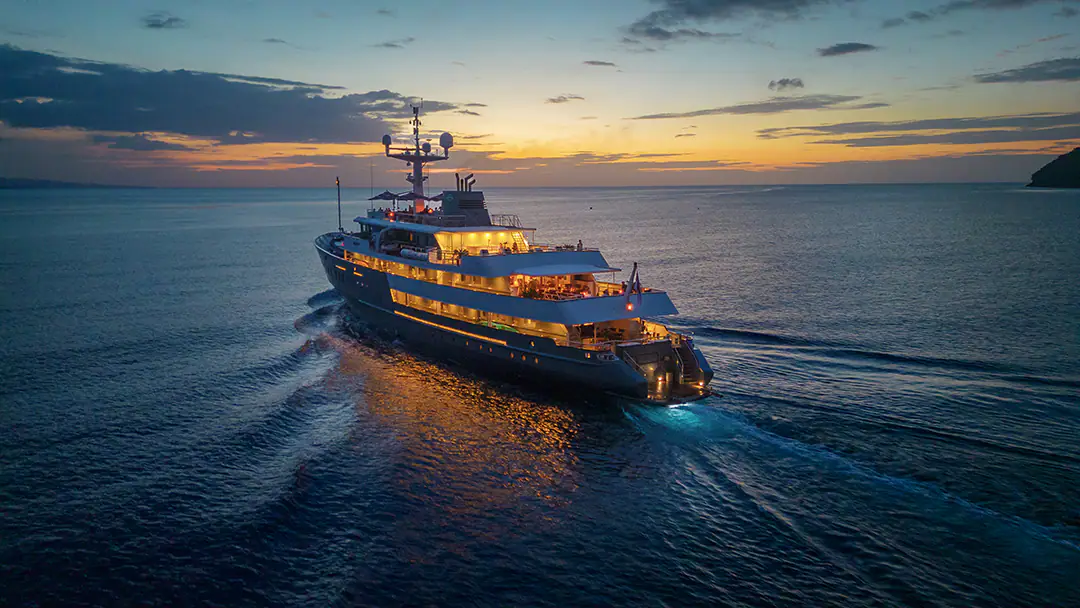
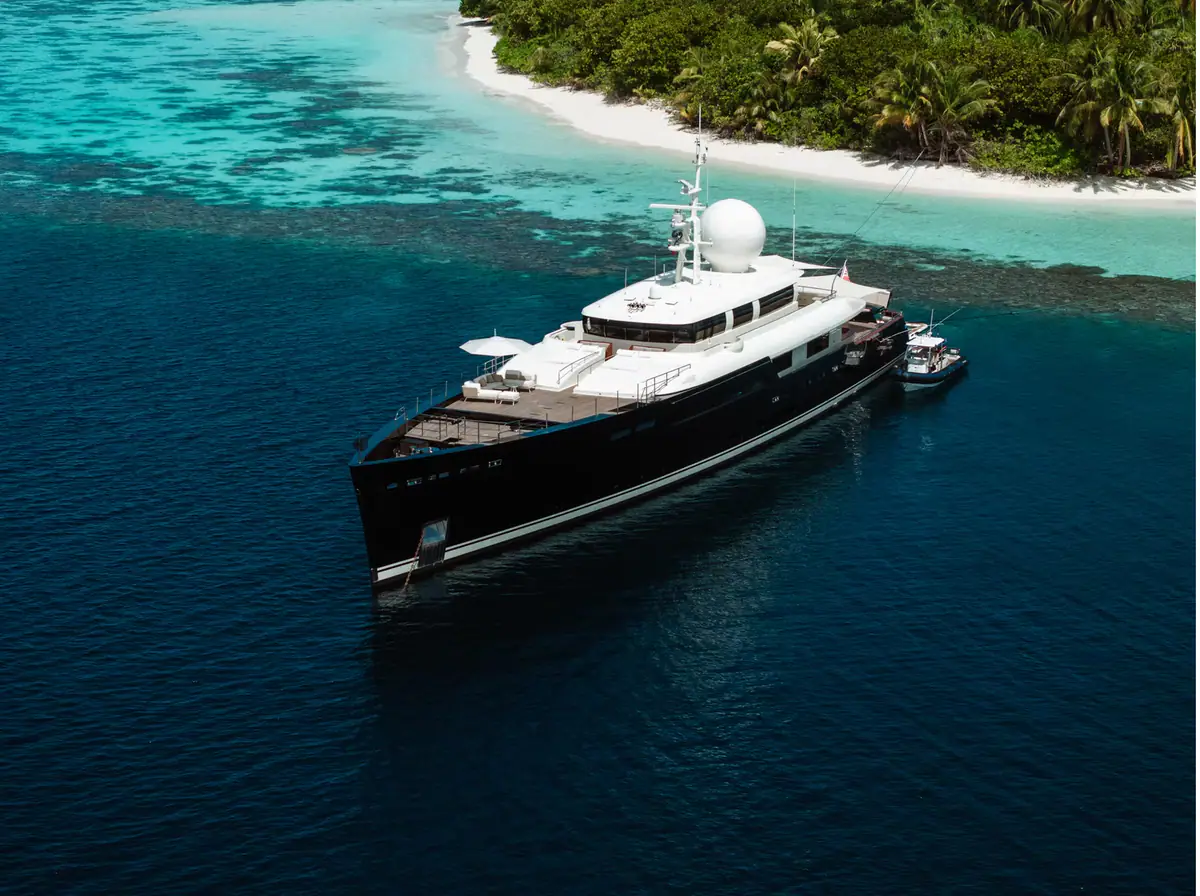
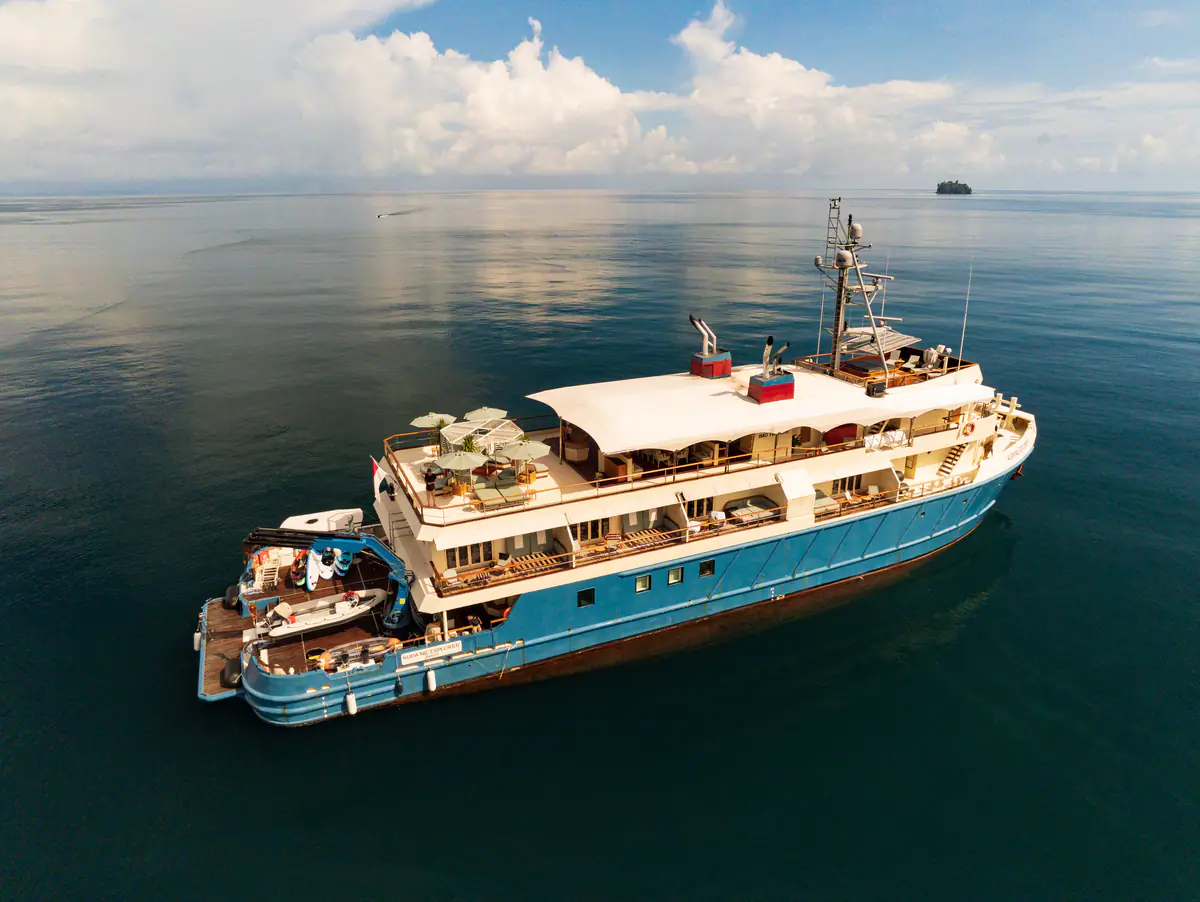
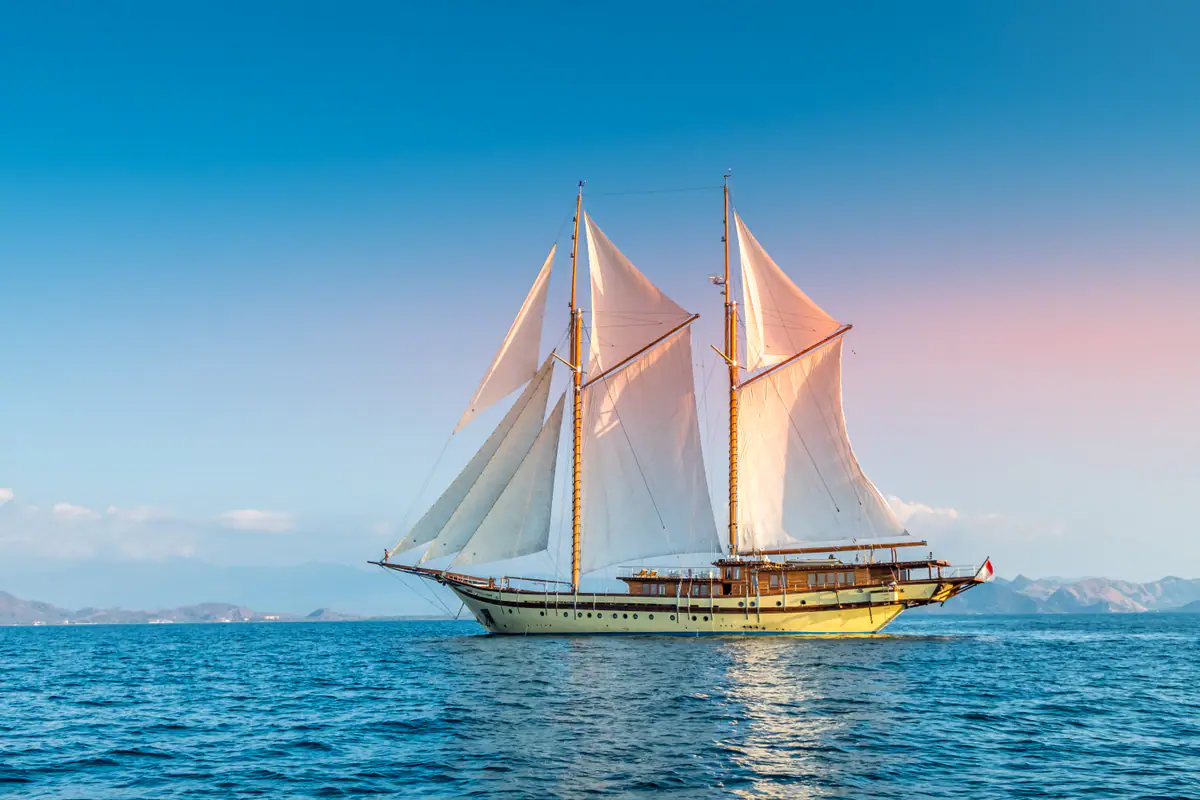
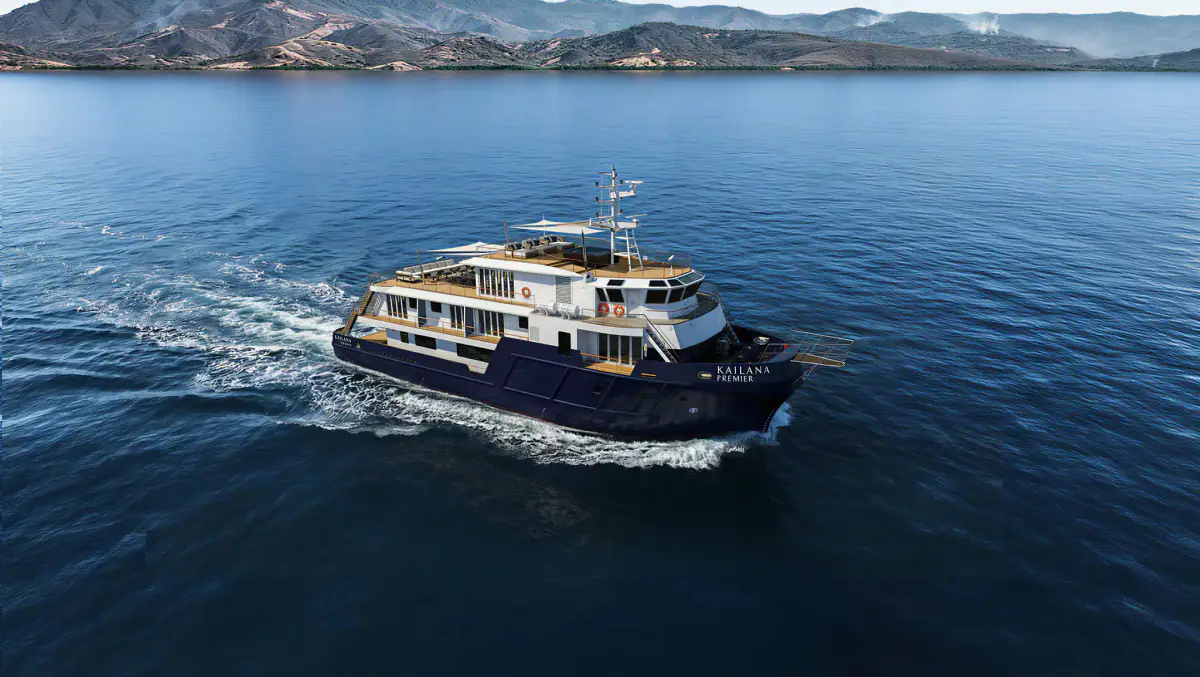
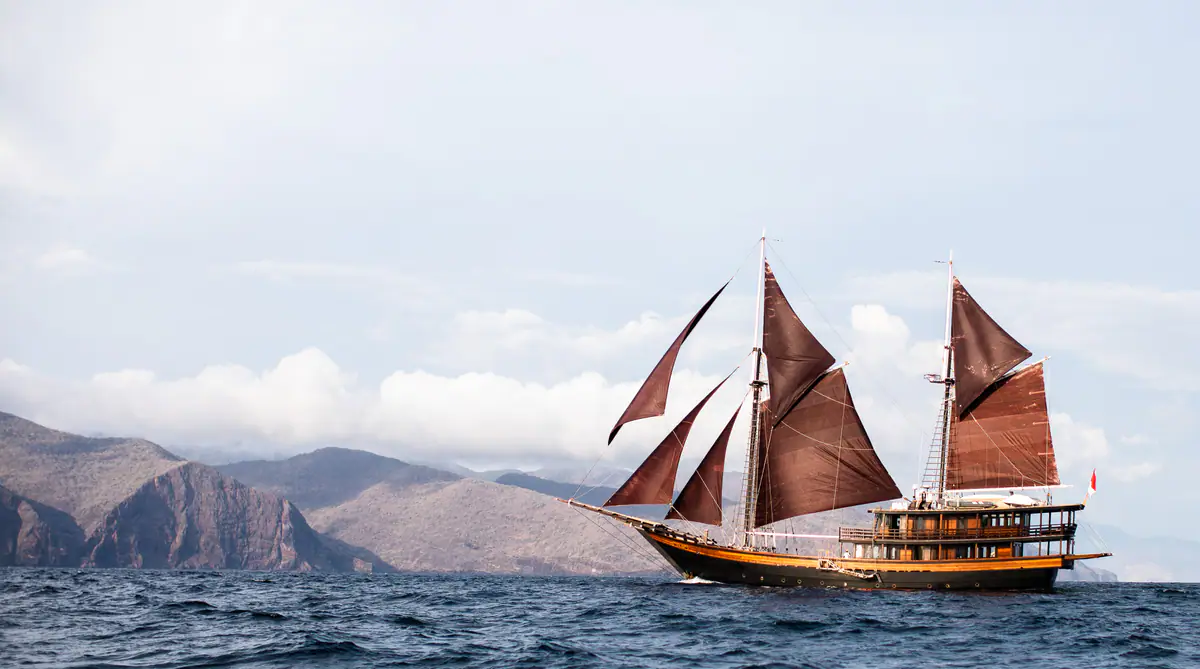
Most boats in Komodo are phinisi, traditional wooden sailing ships built in South Sulawesi. Of the 63 boats on our board that sail Komodo, 55 are phinisi, five are larger expedition vessels, two are motor yachts and one is a sailing yacht. Whole-boat rates on our board start at about US$1,750 a night and reach about US$55,400 for the largest, with a median of around US$9,000 a night. Rates cover the boat, crew and meals; park fees are usually charged separately.
You can browse every boat on the fleet page, check live availability on our board, or send your dates and our concierge will shortlist boats that fit your group, season and budget. Our Komodo yacht charter guide and Komodo private yacht charter cost guide explain the pricing in full.
Typical routes through the park
Most routes start and finish in Labuan Bajo and loop through the central park, with longer trips adding the quieter south. Captains adjust the order to tides, currents, timed entry slots and where other boats are. These are typical shapes, not fixed itineraries.
| Trip length | Typical route | What it covers |
|---|---|---|
| Day trip | Padar, Komodo or Rinca, Pink Beach, a snorkel stop | The headline sights, at speed |
| 2 to 3 nights | Kelor or Kanawa, Kalong at dusk, Padar at sunrise, Komodo or Rinca, Pink Beach, Manta Point, Taka Makassar | The essentials with time to swim and snorkel |
| 4 to 5 nights | All of the above, plus both dragon islands and more dive or snorkel sites | Room for weather and a slower pace |
| 7 nights or more | The central park plus the south around Rinca and Padar's quieter bays, or a run towards Sumbawa or along the Flores coast | Fewer boats and more time in the water |
Day-by-day plans are in our 3-day Komodo boat trip, 4-day Komodo itinerary and 7-day Komodo itinerary. For the stops themselves, see what to see in Komodo National Park, Pink Beach and Taka Makassar.
Is Komodo safe? Boats and dragons
Komodo is a well-travelled destination, and most visits pass without incident, but two things deserve real attention: the boat you choose and how you behave around the dragons.
Choose your boat carefully. The waters between the islands can be rough, and accidents do happen. In December 2025 a tourist boat sank near Padar after reported engine failure, and several passengers, including children, were lost (CBS News). Before booking any boat, ask about life jackets for every guest including children, a working radio and navigation equipment, the crew's experience in the park, and whether the captain will change plans in bad weather. Our yacht charter safety guide has a full checklist.
Respect the dragons. Komodo dragons are wild predators. Visits on Komodo and Rinca happen only with a ranger or naturalist guide, and the park's rules forbid getting too close to wildlife or straying off trails. Attacks on people are rare but have happened. See our guide to Komodo dragon safety.
How much does a Komodo trip cost?
The total cost of a Komodo trip depends mostly on how you travel on the water. Flights to Labuan Bajo, park fees and the boat are the three main items, and the boat is by far the largest.
| Cost item | What to expect |
|---|---|
| Flights | A domestic flight to Labuan Bajo, usually via Bali or Jakarta |
| Park entrance | IDR 250,000 per foreign visitor per day, as of October 2026 |
| Diving fee | IDR 25,000 per diver per day, plus the dive operator's own charges |
| Day trip | Priced per person, varies by operator and boat |
| Shared liveaboard | Priced per person or per cabin, varies by operator |
| Private charter | On our board, from about US$1,750 to about US$55,400 a night for the whole boat |
| Extras | Wine and spirits, crew tips, diving courses, sometimes Starlink |
A private charter is priced per night for the whole boat, so the cost per person falls as the group grows. For a full breakdown, see Komodo private yacht charter cost and what a yacht charter costs per day.
Frequently asked questions
Where is Komodo National Park?
Komodo National Park is in eastern Indonesia, in the province of East Nusa Tenggara, between the islands of Sumbawa and Flores. Its gateway town is Labuan Bajo, at the western tip of Flores, which has its own airport with flights from Bali and Jakarta. The park's main islands are Komodo, Rinca and Padar, and the protected area includes the surrounding sea.
Is there a daily visitor limit at Komodo National Park?
Yes. Since 1 April 2026 the park has limited visits to 1,000 people a day, about 365,000 a year, covering Komodo, Rinca, Padar and 23 dive sites. Visitors must register through the park's SiOra system by the day before. The ministry describes the quota as adaptive, so details may change. On a charter, the operator registers your group.
How much is the Komodo National Park entrance fee?
As of October 2026, foreign visitors pay IDR 250,000 per person per day under Government Regulation 36 of 2024. Scuba divers pay an extra IDR 25,000 per day, and drones cost IDR 2,000,000 per day with a permit. The park changed its financial status in July 2026 and a new tariff regulation was in preparation, so confirm current amounts when you book.
Can you visit Komodo National Park without a tour?
Not really. The park is made up of islands, so you need a boat, and dragon walks on Komodo and Rinca must be done with a ranger or naturalist guide. Since 2026 every visitor must also be registered in the SiOra system before entering. Most people visit on a day trip, a liveaboard or a private charter from Labuan Bajo.
How many days do you need in Komodo National Park?
A day trip covers the headline sights at speed. Two to three nights on a boat lets you see Padar at sunrise, a dragon walk, Pink Beach and the mantas at a comfortable pace. Four to five nights adds room for weather and diving, and a week reaches the quieter south of the park.
Can you see Komodo dragons on Padar Island?
Padar is not a place to see dragons. Its population largely disappeared in the 1970s, and today the island is visited for the ridge viewpoint over its three bays. To see dragons in the wild, visit Komodo Island from the Loh Liang ranger station or Rinca Island from Loh Buaya, on a guided walk.
Are jet skis allowed in Komodo National Park?
No. The park's visitor protocol bans jet skis, Sea-Doos, banana boats, flyboards and similar motorised water sports in its waters. Kayaks, paddleboards and snorkelling are fine. The protocol also bans beach dinners and barbecues on land inside the park, so meals stay on board while you are within the park boundary.
What is the best month to visit Komodo?
July, August and September are the driest months, with only a few rainy days on average, and they are also the busiest. May, June and October are good shoulder months with less pressure on the daily quota. December to March is the wet season, when most charter boats are elsewhere.
Sources
- Komodo National Park, UNESCO World Heritage List
- Komodo Island satellite image and facts, CNES
- Tarif PNBP and carrying capacity, Komodo National Park Authority
- Visitor protocol, Komodo National Park Authority
- Ministry of Forestry limits visitor quota at Komodo National Park (15 April 2026)
- Ministry of Forestry on the adaptive quota (24 April 2026)
- Komodo National Park limits tourist visits to 1,000 per day, Antara
- Quota trial and SiOra registration, detikBali
- Quota reached, visitors turned away from Padar, detikBali
- Komodo National Park becomes a public service agency, Detik Finance
- How is the Komodo doing? KSDAE, Ministry of Forestry
- Komodo dragon population fact sheet, San Diego Zoo Wildlife Alliance
- Komodo dragon, Smithsonian's National Zoo
- Climate change is threatening Komodo dragons, NPR
- Residency, movement patterns, behavior and demographics of reef manta rays in Komodo National Park, PeerJ
- Labuan Bajo climate by month, Weather2Travel
- Direct Singapore to Labuan Bajo flights, Bisnis Indonesia
- Singapore to Labuan Bajo flights begin, Antara
- Tourist boat sinks near Komodo, CBS News